
This is for informational purposes only. For medical advice or diagnosis, consult a professional.
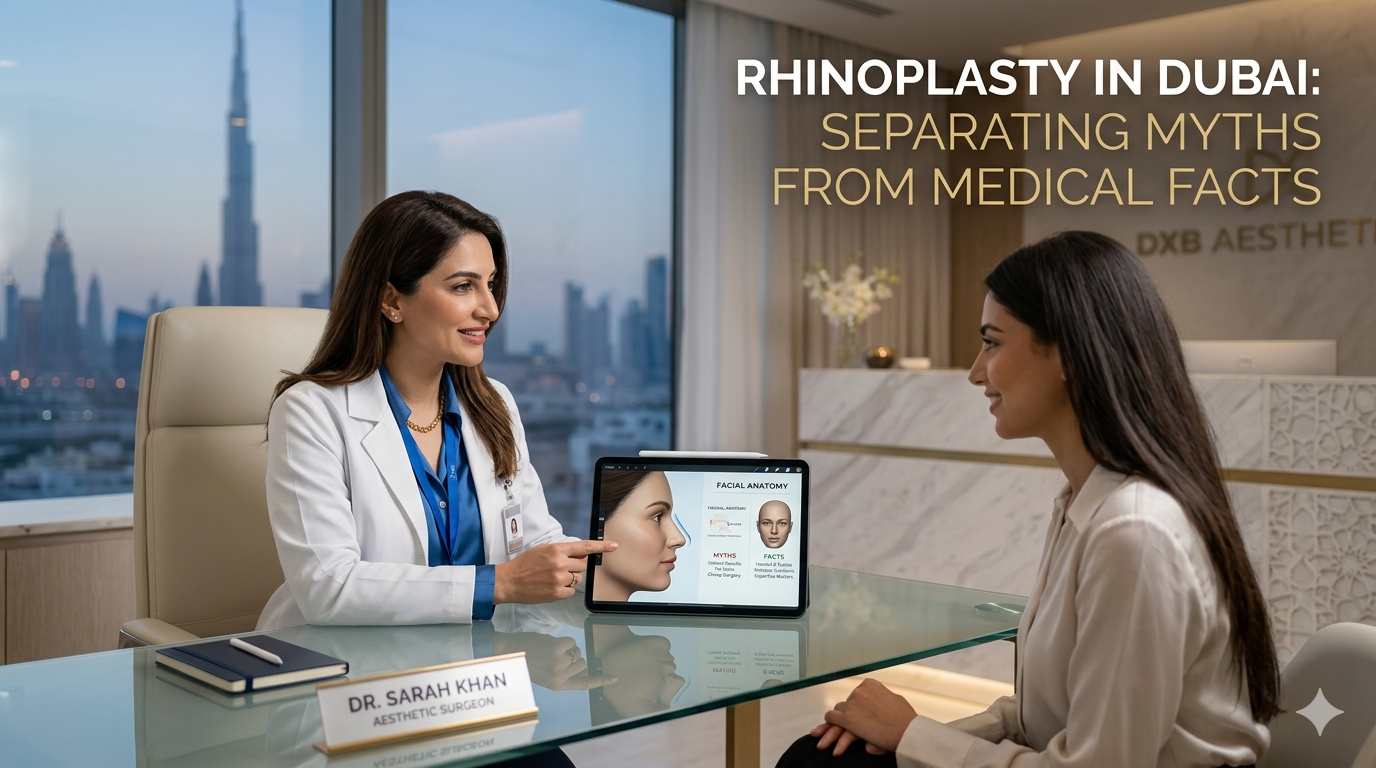
In the bustling medical hub of 2026 Dubai, Rhinoplasty remains one of the most sought-after yet misunderstood procedures. While the city’s clinics are equipped with world-leading technology and board-certified specialists, public perception is still often clouded by outdated information and social media "hype." For anyone considering Rhinoplasty in Dubai, distinguishing between "surgical folklore" and clinical reality is the first step toward a successful outcome.
At Tajmeels Clinic, we believe that transparency is the foundation of trust. To help you navigate your journey, we have compiled the most common myths we hear in our Jumeirah and Dubai Hills consultations, contrasted with the actual medical evidence of 2026.
Myth 1: Rhinoplasty Always Looks Obvious
Many patients fear the "surgical look"—a pinched tip or an overly scooped bridge that screams "nose job."
The Medical Fact: In 2026, the trend has shifted entirely toward Preservation Rhinoplasty. Modern surgeons focus on structural reinforcement rather than aggressive tissue removal. By maintaining the natural ligaments and dorsal lines, we create results that are harmonious with your specific facial proportions. The goal is a result that looks like the nose you were born with, only refined.+1
Myth 2: Recovery Takes Months Off Work
The image of a patient hidden away for weeks with heavy bandages and black eyes is a relic of the past.
The Medical Fact: Thanks to Piezo (Ultrasonic) technology, which shapes bone without damaging blood vessels, bruising is significantly reduced. We observe that most patients in Dubai return to sedentary work within 7 to 10 days. While subtle internal swelling continues to resolve over a year, you are typically "camera-ready" for social and professional life by the second week.
Myth 3: The Results Are Instant
With "reveal" videos dominating social media, it’s easy to think the nose you see on Day 7 is the final version.
- The Medical Fact: Rhinoplasty is a surgery of patience. While the primary shape is visible when the splint comes off, your nose will go through a "maturation phase." It takes a full 12 to 18 months for the fine definition in the tip to reveal itself as the skin fully "shrink-wraps" over the new framework.
Myth 4: Any Surgeon Can Perform Rhinoplasty
Since many plastic surgeons offer the procedure, patients often assume the skill set is universal across all aesthetic surgeries.
- The Medical Fact: Rhinoplasty is widely considered the most difficult procedure in all of plastic surgery. It requires a deep understanding of both Aesthetic Artistry and Functional Airway Management. You should always choose a specialist who holds a DHA (Dubai Health Authority) license and has a proven track record specifically in nasal surgery. At our clinic, we prioritize surgeons who treat the nose as their primary sub-specialty.
Myth 5: It Only Changes Your Appearance
A common misconception is that rhinoplasty is a purely "vain" or cosmetic pursuit.
- The Medical Fact: For many patients in the UAE, the procedure is a Functional Necessity. Whether it's correcting a deviated septum, repairing a sports injury from a padel match, or opening collapsed nasal valves, Septorhinoplasty improves airflow and sleep quality. Improving your breathing is often the most life-changing aspect of the surgery.
Myth 6: Non-Surgical is Always Safer
"Liquid Rhinoplasty" (using fillers) is often marketed as a risk-free alternative to the operating room.
The Medical Fact: While non-surgical options have no downtime, they carry their own medical risks, including vascular complications if filler enters an artery. Furthermore, fillers cannot reduce the size of a nose or fix breathing issues—they only add volume. For permanent structural changes and functional health, surgical intervention remains the gold standard in 2026.+2
What the Medical Evidence Actually Shows
As we analyze the data from thousands of successful cases in 2026, several key truths emerge:
- 3D Imaging is Crucial: Clinics that use advanced simulation tools have higher patient satisfaction rates because expectations are aligned before the first incision.
- Health is the Priority: Patients who follow pre-op protocols (like quitting smoking 4 weeks prior) have significantly lower complication rates and faster wound healing.
- The "Dubai Standard": The UAE’s strict medical regulations ensure that accredited facilities maintain world-class sterilization and anesthesia protocols, making Dubai one of the safest places globally for this procedure.
Why Choose Tajmeels Clinic?
At Tajmeels Clinic, we don't just follow trends; we set the standard for evidence-based care. Our Expertise in Rhinoplasty in Dubai is built on a foundation of medical facts, not myths. We provide the Experience and Trustworthiness needed to guide you through a safe, transparent, and transformative process. By utilizing 2026’s most precise diagnostic and surgical tools, we ensure your result is as functional as it is beautiful, allowing you to breathe—and look—your absolute best.
Frequently Asked Questions
Will my voice change after rhinoplasty?
This is a rare concern. Unless you are a professional opera singer, the subtle changes in the nasal resonance are generally imperceptible to the human ear and do not affect your natural speaking voice.
Is rhinoplasty painful?
Surprisingly, no. Most patients describe the feeling as "heavy congestion" or "pressure" rather than sharp pain. In 2026, we use long-acting local anesthetics that keep you comfortable through the initial recovery period.
Can I have rhinoplasty if I have allergies?
Yes. In fact, many patients find that their allergy symptoms (like congestion) become easier to manage once structural blockages in the nose are cleared during surgery.
What is the "best" age for rhinoplasty?
Once facial growth is complete (usually 16 for females and 18 for males), there is no "perfect" age. We see excellent results in patients ranging from their 20s to their 60s.
Does insurance cover rhinoplasty in the UAE?
Insurance generally covers the functional components (like Septoplasty) if a breathing obstruction is documented by a specialist. Cosmetic refinements are elective and paid out-of-pocket.
How long do I need to stay in Dubai if I am a medical tourist?
We recommend a minimum stay of 10 to 12 days. This allows for the initial surgery, your Day 7 splint removal, and a final check-up before you receive your "Fit-to-Fly" certificate.